Introduction: Why Injection Molding Is Central to Modern MedTech Manufacturing
Plastic injection molding is a manufacturing process in which molten plastic is forced under high pressure into a precision-machined steel mold, cooled, and ejected as a finished part. Its main advantages for medical devices are high output production, low cost per part at scale, design flexibility for complex geometries, and high repeatability – qualities that set it apart from CNC machining and other methods. Plastic injection molding is widely used to mass-produce identical plastic parts, and the process now accounts for nearly 50% of all plastic processing methods across various industries.
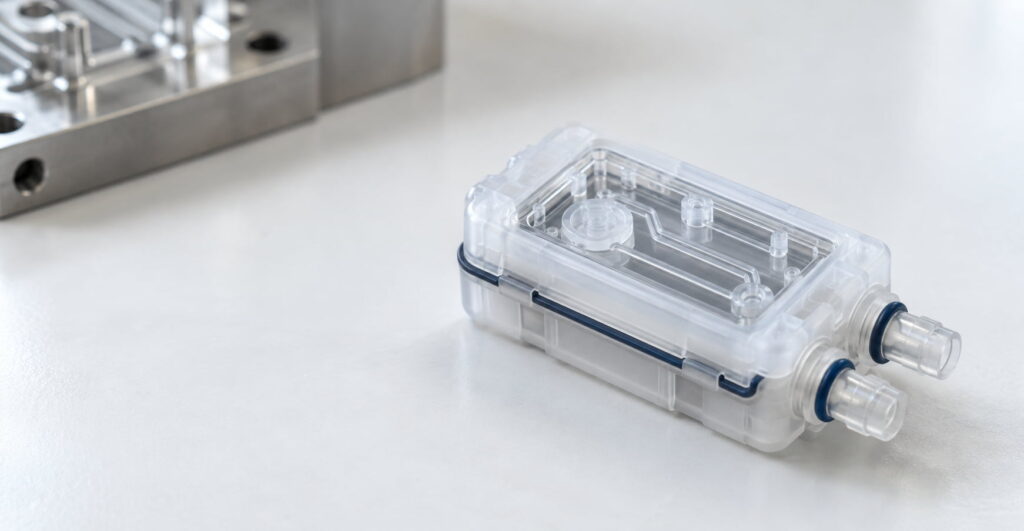
The global injection molding market was valued at $270 billion in 2023, reflecting its role as a cornerstone of modern manufacturing. Between 2020 and 2025, demand for diagnostic instruments and patient monitoring devices surged – driven by pandemic-era diagnostics, telehealth expansion, and remote monitoring – making injection molding essential for scaling single-use consumables and device housings. Typical medical applications include housings for in-vitro diagnostic analyzers, disposable diagnostic cartridges, infusion pump enclosures, and sensor housings.
This article is for OEMs evaluating plastic injection molding against alternative manufacturing methods during product industrialization – from prototype through clinical builds to full commercial production.
High-Output Production and High Efficiency
Once tooling is qualified and process parameters locked in, the injection molding machine routinely achieves cycle times in the 10–60 second range for many medical plastic parts. Injection molding can achieve cycle times as short as 10 seconds for thin-wall components, and once operational, it can produce hundreds of products per hour with minimal operator intervention.
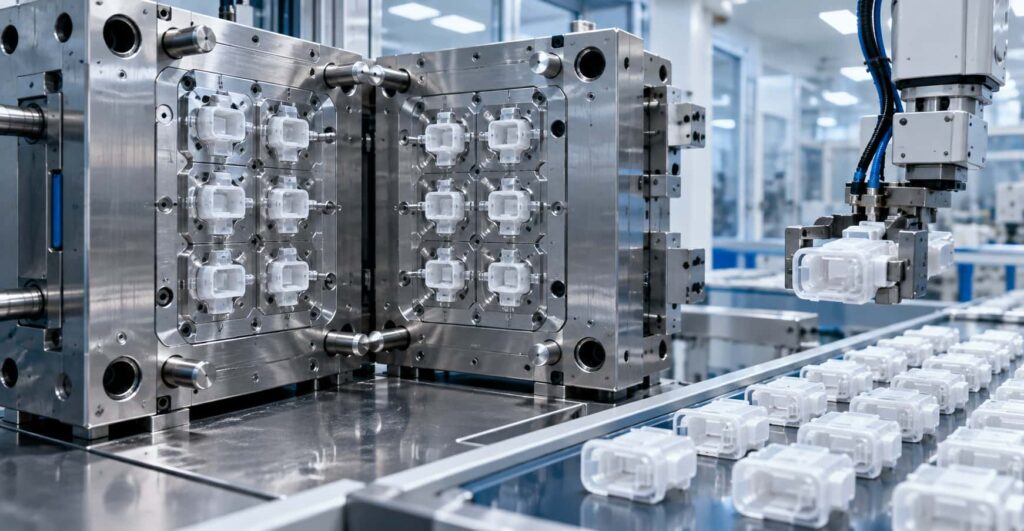
Multi cavity molds and family molds dramatically increase throughput. A single hardened steel tool with multiple cavities can yield tens of thousands to millions of parts per year for consumables like test cartridges or syringe components. High-output production runs can exceed 100,000 parts, making this the ideal process for devices with high annual consumption rates. In auto-injector component production, for example, cycle times of 15–25 seconds for thin-walled housings and 25–40 seconds for overmolded assemblies are standard.
High production efficiency is further enhanced because injection molding integrates well with automated handling systems to enhance production consistency. Robotic part handling, automated inspection via vision systems, and in-line packaging reduce labor content per part significantly. Automated machinery reduces labor costs in the injection molding process, a stark contrast to CNC machining where each part often requires individual setup. For consumables-heavy medical devices – diagnostic cartridges or test cassettes used daily across hospitals and labs – this production speed directly supports continuity of supply. When demand surges occur, qualified molds can be deployed across multiple machines to scale output rapidly.
Cost-Effective at Scale and Low Cost per Part
Mold design and fabrication represent a significant upfront investment. Medical application molds must meet tight tolerances, long tool life, and regulatory traceability. However, cost per part decreases with high-volume production runs, dropping sharply once volumes pass tens of thousands of units annually.
The cost structure contrasts starkly with other manufacturing processes. CNC machining is economically viable for prototypes and low volumes, but machining time, labor, and finishing keep per-unit costs high – often $50–$100 per enclosure for small batches. Similarly, while 3D printing excels at geometry exploration, injection molding can achieve costs lower than 3D printing at sustained volumes. Consider a diagnostic instrument enclosure: machined prototypes might cost $75 each in a batch of 50, while a production mold producing hundreds of thousands of units brings the overall cost per part into single-digit dollars.
Using aluminum molds can reduce costs for medium volumes during clinical builds, while hardened steel production tools – capable of over one million cycles – serve commercial scale. This tooling strategy lets OEMs manage cash flow and design risk across the product lifecycle. The largely automated, highly efficient process keeps labor content per part low, contributing to cost effectiveness without sacrificing consistent quality.
Ability to Produce Complex Geometries and Detailed Features
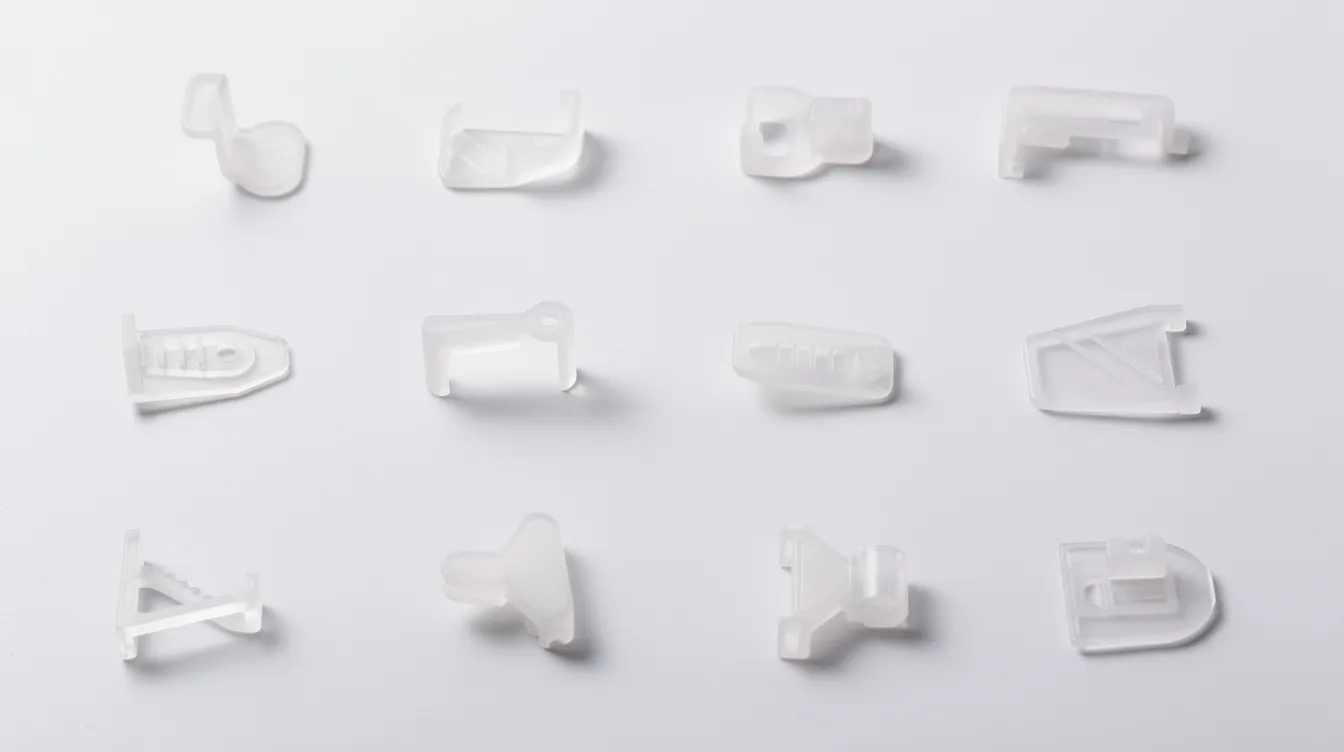
Because molten plastic is injected under high pressure into detailed mold cavities, the injection molding process enables fine details, undercuts (with side-actions or collapsible cores), and wall thicknesses down to approximately 0.5 mm. Injection molding can create complex shapes and intricate designs that traditional machining struggles with, and it produces complex, detailed plastic parts efficiently. The process allows for intricate shapes and high detail that would be prohibitively expensive or simply impossible with subtractive manufacturing methods.
For medical devices, this ability to produce complex geometries translates into specific, high-value features:
- Snap-fits and living hinges on diagnostic cartridge lids and flip covers
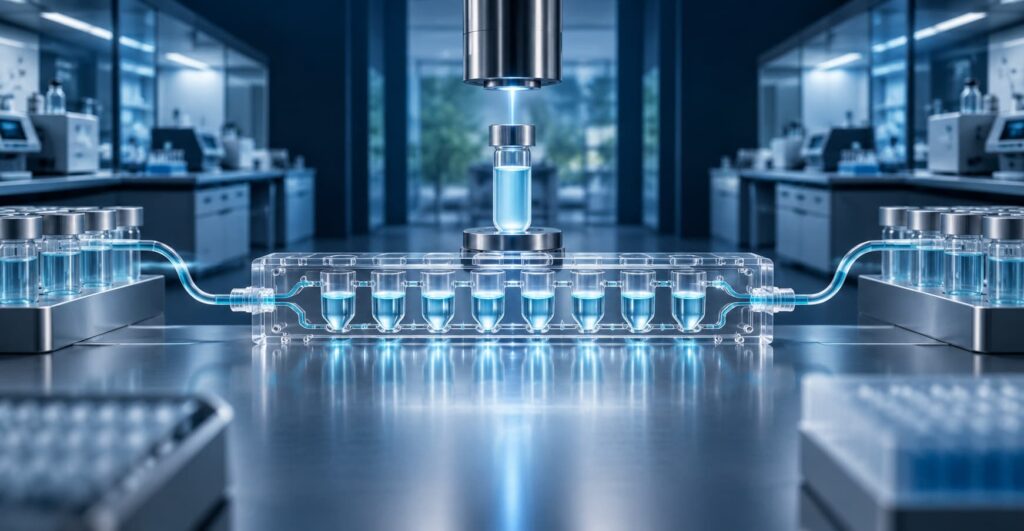
- Internal fluidic channels for lab-on-chip or IVD cartridge flow paths
- Strain-relief features on sensor cable enclosures and light pipes for optical clarity
- Textured or grip surfaces for secure handling of handheld instruments
Scientific molding optimizes the production of complex geometries by controlling melt temperature, fill pattern, cavity pressure, and cooling – maintaining dimensional stability across multiple functional zones even when geometries vary significantly within a single part. Injection molded parts typically feature excellent surface finishes requiring little to no post-processing, which is valuable for both functional and aesthetic surfaces on medical devices.
Some design limitations still apply – draft angles, uniform wall thicknesses, and gate placement all require attention – topics covered in the design limitations section below.
High Repeatability, Tight Tolerances, and Quality Stability
A defining advantage of injection molding is its high repeatability. Once the process window is established through scientific molding, every shot closely replicates the previous one. Injection molding can produce parts with minimal deviation – weight variation below 0.5% and even under 0.1% has been demonstrated in medical device applications.
Injection molding can produce parts with tolerances of +/- .001 inches, and injection molding achieves tolerances of +/- .001 inches on critical features like mating surfaces or fluidic interfaces. Achievable high tolerances depend on material, geometry, and tool quality, but high precision down to tens of microns is realistic with hardened steel tools and controlled environments.
Process controls – cavity pressure monitoring, mold flow simulation, real-time statistical process control – maintain quality over long production runs for regulated devices. This matters directly in FDA, EU MDR, and ISO 13485 environments, where stable, validated manufacturing processes simplify process performance qualification and ongoing verification. Compared with manual assembly or less controlled manufacturing methods, injection molding reduces scrap, rework, and complaint risk by removing human variability from part production. In one documented example, scientific molding and process optimization reduced shot weight variation to approximately 0.08% while cutting cycle time from 56 to 44 seconds.
Material Flexibility and Performance Tuning
Injection molding supports a wide selection of thermoplastics and elastomers for tailored product properties. Common medical-grade plastic materials include polycarbonate, polypropylene, ABS, PEEK, cyclic olefin polymers, and thermoplastic elastomers. Remarkably, injection molding can use over 90,000 types of plastics, and there are more than 25,000 engineered materials available – each with different properties suited to specific device requirements.
Additives, fillers, and colorants allow tuning of tensile strength, stiffness, impact resistance, heat resistance, corrosion resistance, and biocompatibility. PEEK composites with carbon fiber fillers, for instance, achieve significantly higher bending modulus than 3D-printed equivalents while maintaining biocompatibility. Injection molding allows for a wide range of product characteristics, from rigid structural housings to flexible sealing elements, all within the same production platform.
Injection molding can combine multiple types of plastics in one part through overmolding or multi-shot molding – integrating soft-touch grips on surgical handpieces or seals directly into diagnostic cartridges. It also accommodates both plastics and certain metals through insert molding. OEMs can match brand colors precisely and manage batch-to-batch color consistency for user recognition, something difficult to achieve with post-machining or painting of metal parts or metal components.
Reduced Waste and Sustainability Advantages
Injection molding is largely a net-shape process, generating minimal waste compared to subtractive methods. Injection molding generates significantly less waste than CNC machining, where 50–80% of raw material may be cut away. Injection molding produces very little waste compared to other methods – molten material fills only the mold cavity, leaving runners and sprues as the primary waste plastic.
Recycled plastic can be reused in injection molding processes. Runners, sprues, and non-conforming parts are commonly reground and blended back into production – an efficient process for non-patient-contact housings and internal structural components. For critical fluid-contact surfaces, virgin material is typically required to meet regulatory standards for extractables and leachables.
Hot runner systems minimize waste in injection molding processes by eliminating cold runners entirely. Combined with optimized gating, improved cooling lines, and cycle-time reduction, these innovations lower energy usage per part and support corporate sustainability goals. While plastic products themselves raise end-of-life questions, well-designed high-volume injection molding remains one of the most resource-efficient manufacturing processes available for producing high quality parts at scale.
Impact on Lead Times Across the Product Lifecycle
Tooling design and fabrication extend initial lead times – simple prototype molds take 2–4 weeks, while full production hardened steel, multi-cavity tools may require 8–12 weeks or more. After mold delivery, process development, validation batches, and regulatory documentation add another 4–8 weeks. A realistic timeline from design freeze to commercial production spans 12–24 weeks.
However, once the mold is ready, production lead times are extremely short. Predictable cycle times and high efficiency help OEMs plan inventory, manage product launches, and respond to demand surges reliably. The typical MedTech sequence – 3D-printed or CNC-machined prototypes, bridge tooling for clinical builds, validated production tools for commercial volumes – lets teams build confidence incrementally across the full medical device lifecycle.
Integrated design, tooling, and molding teams compress overall lead times through concurrent engineering. When design for manufacturing input runs in parallel with tooling procurement, OEMs shave weeks off the path to first-article inspection and process validation.
Understanding Design Limitations and How to Mitigate Them
Despite its advantages, the injection molding process has its own set of design limitations. Parts require draft angles for ejection – vertical faces need taper. Ejector pins push finished parts from the mold, and their placement affects cosmetic surfaces. Uniform wall thicknesses are necessary to prevent sink marks, warpage, and internal stresses. Extremely large parts or highly variable geometries may be uneconomical.
Early Design for Manufacturing input helps modify concepts so they remain clinically and functionally faithful while becoming moldable and cost effective. Collaboration during design reduces tooling changes and downtime – a practical benefit that compounds over a programme’s lifetime. Design modifications made before tooling begins are orders of magnitude cheaper than changes after mold steel is cut.
For production runs below roughly 1,000 units, or for patient-specific parts requiring frequent design modifications, CNC machining or additive manufacturing may be more practical despite higher per-unit cost. The goal is not to force every part into injection molding but to recognize where each of these other manufacturing methods serves the product best – and where injection molding delivers clear advantages at volume.
How Syrma Johari MedTech Helps Realize Injection-Molded Medical Products
Syrma Johari MedTech (SJML) is an integrated MedTech partner that connects design engineering, compliance, industrialization, and precision plastics manufacturing. Rather than operating as a standalone molder, SJML supports OEMs from early DfM input and material selection through tooling development, process validation, and high-volume production of injection molded parts and assemblies.
SJML’s capabilities in precision plastics and injection molding, controlled-environment and cleanroom manufacturing, and value engineering help OEMs optimize both cost and performance for future use across device generations. India-based manufacturing provides engineering depth, scalability, and supply-chain resilience for devices shipped to North America, Europe, and 80+ markets globally – without compromising on regulatory rigor or consistent quality.
To discuss your injection molding and plastics-manufacturing needs, speak with SJML’s MedTech plastics team.